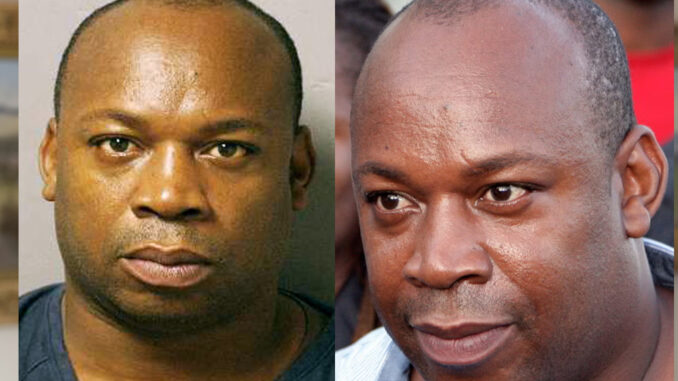
Christopher Coke, better known as Dudus, was once one of the most influential figures in Tivoli Gardens, a neighbourhood in Kingston, Jamaica. His power extended beyond the community into an international criminal network involved in drug trafficking and weapons smuggling. But his arrest in 2010 followed a violent confrontation that left dozens of Jamaicans dead. This Christopher Coke biography examines how he gained that influence, the crimes behind his conviction and what has happened to him since his imprisonment in the United States.
Coke inherited much of his influence from his father, Lester Lloyd Coke, who had been a leading figure in the Shower Posse. After his father’s death in 1992, Christopher became increasingly powerful in West Kingston. Some residents regarded him as a community provider because he distributed assistance and helped fund local activities. American prosecutors, however, described an organisation that maintained control through intimidation, illegal firearms and international drug trafficking.
His extradition became one of Jamaica’s biggest political and security crises in 2010. Coke eventually pleaded guilty in a Manhattan federal court and received a 23-year prison sentence in June 2012. Now 57, he remains incarcerated in New Jersey. In May 2026, new reporting confirmed that his projected release date had been brought forward to January 29, 2028, renewing interest in what may happen when his sentence ends.
Christopher Coke Quick Facts
| Detail | Information |
|---|---|
| Full name | Christopher Michael Coke |
| Popular nickname | Dudus |
| Other aliases | Presi, President, Shortman |
| Date of birth | March 13, 1969 |
| Age | 57 years old (October 2026) |
| Birthplace | Kingston, Jamaica |
| Nationality | Jamaican |
| Father | Lester Lloyd Coke (Jim Brown) |
| Mother | Pauline “Patsy” Halliburton |
| Education | Ardenne High School, Jamaica |
| Known for | Leadership of the Shower Posse criminal organisation |
| Arrest date | June 22, 2010 |
| U.S. guilty plea | August 31, 2011 |
| Sentencing date | June 8, 2012 |
| Prison sentence | 23 years |
| Reported prison | FCI Fort Dix, New Jersey, United States |
| Latest reported release date | January 29, 2028 (subject to change) |
Early Life and Family Background
Christopher Michael Coke was born on March 13, 1969, in Kingston, Jamaica. He grew up in a family already closely associated with organised crime in West Kingston.
His father, Lester Lloyd Coke, was widely known as Jim Brown. He became one of the leading figures in the Shower Posse, a Jamaican criminal network with operations extending into the United States.
Christopher’s mother, Pauline “Patsy” Halliburton, remained an important figure in his family. In a June 2010 interview with the Jamaica Observer, she publicly expressed concern for his safety while authorities were searching for him.
Although the Coke family lived in a community affected by poverty and violence, Christopher had access to educational opportunities that were unavailable to many other children in the neighbourhood.
He attended Ardenne High School, a well-known secondary school in Kingston.
A 2010 investigation by The Sunday Gleaner interviewed former teachers who remembered him as a quiet student with a particular talent for mathematics.
His educational background contrasts with the criminal career he later pursued. There is no reliable evidence that he completed university education or obtained a professional degree.
Who Was Christopher Coke’s Father?
Lester Lloyd Coke, popularly known as Jim Brown, was Christopher Coke’s father.
The elder Coke was a major figure in the Shower Posse, which developed connections between criminal groups in Jamaica and the United States.
American authorities accused the organisation of involvement in large-scale narcotics trafficking and serious violence.
In the early 1990s, Lester Coke was arrested in Jamaica while American authorities sought his extradition.
He died in February 1992 following a fire at the Jamaican prison where he was being held.
His death created a leadership vacuum within the criminal organisation.
Christopher, then in his early twenties, subsequently emerged as a leading figure in the network. His older brother, Anthony Coke, also known as Jah-T, had died shortly before their father’s death.
The family history and the younger Coke’s rise were examined in a 2010 profile published by The Guardian.
How Christopher Coke Became the Leader of the Shower Posse
Following his father’s death, Christopher Coke gradually consolidated control over the organisation based in Tivoli Gardens.
The Shower Posse operated through groups involved in the international sale of illegal drugs and the trafficking of firearms.
According to the United States Department of Justice, Coke led an organisation also known as the Presidential Click from the early 1990s.
Its members operated in Jamaica, the United States and other countries.
Prosecutors established that members of the network distributed marijuana, cocaine and crack cocaine and sent the proceeds to Coke and his associates.
The organisation also obtained firearms from the United States for use in Jamaica.
Through this network, Coke acquired considerable influence in parts of Kingston, especially Tivoli Gardens.
Why Was He Called Dudus?
Christopher Coke was widely known by the nickname Dudus, sometimes written as Duddus.
Other names associated with him included Presi, President and Shortman.
These aliases appeared in official United States law-enforcement records during his extradition and prosecution.
His nickname became so widely recognised that Jamaican news reports frequently referred to him simply as Dudus.
However, a dependable original account explaining precisely how he first acquired the nickname has not been established.
Christopher Coke’s Influence in Tivoli Gardens
Tivoli Gardens is a residential community in West Kingston that has a complicated history involving poverty, party politics and organised crime.
For many years, armed groups exercised considerable influence over parts of the neighbourhood.
Coke developed a reputation among some residents as someone who provided money, employment opportunities and assistance to families experiencing financial hardship.
Contemporary reporting also described community activities supported by people connected to his organisation.
However, these activities existed alongside documented criminal operations.
American prosecutors established that armed men guarded the community and operated under Coke’s direction.
His influence illustrates how a criminal organisation can gain control over a neighbourhood partly by providing services while also using coercion and violence.
Some residents supported him because they felt his organisation offered assistance where government services were inadequate. Others experienced the consequences of criminal activity and insecurity.
The difference between public support and lawful authority became central to the events surrounding his arrest.
Why Did the United States Want Christopher Coke?
American authorities sought Coke’s extradition because of his alleged leadership of an international drug and firearms trafficking organisation.
The United States submitted an extradition request in 2009.
The request became politically controversial because the Jamaican government, led by Prime Minister Bruce Golding, delayed authorising his extradition.
Golding represented the Kingston Western constituency, which included Tivoli Gardens.
The delay drew criticism and raised questions about political relationships with influential figures in communities controlled by armed groups.
In May 2010, the government moved ahead with the extradition process.
That decision triggered a confrontation between Jamaican security forces and gunmen loyal to Coke.
What Happened During the 2010 Tivoli Gardens Operation?
In May 2010, Jamaican police and military personnel entered Tivoli Gardens in an operation intended to capture Coke and restore government authority.
Armed supporters had erected barricades and resisted attempts by the security forces to enter the area.
The confrontation led to several days of violence, causing extensive loss of life and damage to property.
In its 2017 statement apologising for the operation, the Jamaican government reported that 73 civilians and one soldier were killed.
Some other official and journalistic accounts give slightly different totals because of differences in the people and incidents included.
The operation raised serious questions about how Jamaica’s security forces used lethal force.
Human rights organisations received reports that unarmed civilians had been killed.
In June 2010, Human Rights Watch called for an independent investigation into possible extrajudicial executions.
A subsequent commission of enquiry criticised aspects of the operation, including decisions made by senior security officials.
The commission found evidence suggesting that some civilians had been unlawfully killed.
Its findings were examined in a 2016 report by The Jamaica Gleaner.
The investigation made clear that the events were not simply a confrontation between police and a wanted criminal. They were also a major human rights crisis affecting ordinary residents.
Christopher Coke’s Arrest and Extradition in 2010
Coke escaped capture during the initial military and police operation in Tivoli Gardens.
Authorities continued searching for him for several weeks.
On June 22, 2010, Jamaican police arrested Coke near Kingston.
He was travelling in a vehicle driven by Reverend Merrick “Al” Miller, a Jamaican pastor who said he was helping Coke surrender to American authorities.
Following his arrest, Coke waived his right to contest extradition through a full judicial hearing in Jamaica.
On June 24, 2010, he was transferred to the custody of American authorities and taken to New York.
The U.S. Department of Justice’s June 24 announcement documented his arrival and the charges he was expected to face.
His extradition brought an end to the manhunt that had dominated Jamaica’s national news for weeks.
Christopher Coke’s Guilty Plea and 23-Year Prison Sentence
After his extradition, Coke faced prosecution in the United States District Court for the Southern District of New York.
On August 31, 2011, he pleaded guilty to two federal offences:
- Racketeering conspiracy: Connected with the criminal enterprise he had led.
- Conspiracy to commit assault with a dangerous weapon in aid of racketeering: Connected with violence undertaken for the organisation.
The racketeering case involved the organisation’s drug-trafficking and firearms activities.
Federal prosecutors also described an incident in May 2007 when Coke and others agreed to arrange an assault against a narcotics trafficker in the Bronx, New York, over an unpaid drug debt.
On June 8, 2012, U.S. District Judge Robert P. Patterson sentenced Coke to 23 years in federal prison.
In addition, the court imposed four years of supervised release and ordered him to forfeit $1.5 million.
These details are confirmed in the official U.S. Department of Justice sentencing announcement.
Timeline of Christopher Coke’s Criminal Case
| Date | Event | Significance |
|---|---|---|
| 1992 | Death of Lester Coke | Christopher emerged as a leader of the family-associated criminal organisation |
| 2009 | U.S. extradition request | American authorities sought to prosecute Coke |
| May 2010 | Tivoli Gardens operation | Deadly confrontation involving security forces and armed groups |
| June 22, 2010 | Arrest in Jamaica | Coke was captured following a nationwide manhunt |
| June 24, 2010 | Transfer to the United States | He arrived in New York to face federal charges |
| August 31, 2011 | Guilty plea | Admitted two racketeering-related conspiracy offences |
| June 8, 2012 | Federal sentencing | Received 23 years in prison |
| February 2025 | Release-date revision reported | Projected release changed to January 25, 2029 |
| May 2026 | Further release-date revision | Projected release moved to January 29, 2028 |
Where Is Christopher Coke Now?
Christopher Coke is serving his federal prison sentence in the United States.
In May 2026, The Jamaica Gleaner confirmed that he was being held at the Federal Correctional Institution, Fort Dix, in New Jersey.
FCI Fort Dix is a low-security federal correctional institution operated by the United States Bureau of Prisons.
According to the newspaper’s report, a longtime acquaintance of the Coke family, Reverend Merrick Miller, said he had heard that Coke was participating in religious and other prison programmes.
However, Miller acknowledged that he had not spoken directly with the family for some time.
The Bureau of Prisons declined to discuss Coke’s individual participation in programmes, citing privacy and security considerations.
Those statements therefore do not independently confirm the details of his activities or personal beliefs while incarcerated.
When Will Christopher Coke Be Released from Prison?
According to the latest verified reporting, Christopher Coke’s projected release date is January 29, 2028.
The date was reported by The Jamaica Gleaner on May 6, 2026, citing an update to the United States Bureau of Prisons records.
His original projected release date had been July 4, 2030.
By February 2025, the date had changed to January 25, 2029. A further reduction reported in May 2026 moved it forward to January 2028.
U.S. authorities explained that federal prisoners can qualify for sentence reductions through good-conduct credits and certain approved programmes.
However, the Bureau of Prisons did not publicly confirm every individual reason for the reductions in Coke’s sentence.
January 29, 2028, is a projected date, not a guarantee of release on that day. Prison calculations, disciplinary decisions and other legal circumstances can affect the final date.
The available reports also do not establish what immigration arrangements would apply after his release or whether he would immediately return to Jamaica.
Was Christopher Coke Married? Wife and Children
Christopher Coke has kept much of his personal and romantic life outside independently documented public records.
In August 2010, The Jamaica Gleaner identified Stephanie Gayle, also known as Sue Gayle, as his girlfriend.
She was mentioned in police investigations following Coke’s arrest. The reporting identified their relationship at that time but did not establish that the two were legally married.
There is no dependable public confirmation of a current wife or legally documented marriage in the sources reviewed.
Likewise, although online websites make claims about his children, a reliable and complete account of his children and their identities has not been established.
It would be misleading to publish an unsupported spouse’s name or a definite number of children.
Christopher Coke’s Net Worth and Businesses
Christopher Coke’s current personal net worth is not publicly verified.
His criminal organisation generated money through drug trafficking and other illegal activities, according to U.S. prosecutors.
Jamaican authorities also investigated assets and businesses linked to Coke and people associated with him.
Some contemporary reports connected his name with companies operating in construction, security and entertainment.
However, there is no dependable publicly available financial statement establishing the present value of his personal property or assets.
The $1.5 million forfeiture ordered by the federal court in 2012 represents a criminal financial penalty, not a calculation of his net worth.
Claims that he possesses a particular fortune should therefore be treated cautiously unless supported by verifiable financial records.
How Christopher Coke’s Case Changed Jamaica
The pursuit of Christopher Coke exposed major problems in Jamaica’s relationship with organised crime and the policing of politically influential communities.
His ability to exercise influence in Tivoli Gardens raised difficult questions about why criminal organisations could become powerful providers of services and employment in certain neighbourhoods.
The extradition controversy also intensified public scrutiny of political relationships with local power brokers.
Most importantly, the deaths during the 2010 security operation led to demands for accountability and changes in how Jamaican security forces conduct major operations.
In December 2017, Jamaica’s government formally apologised to people affected by the events in West Kingston.
The apology followed the findings and recommendations of the commission that investigated the operation.
The wider lessons of the case concern both the harms caused by criminal organisations and the responsibility of governments to protect civilians while enforcing the law.
Is Christopher Coke Still in Prison in 2026?
Yes. The most recent verified prison-status report reviewed places Christopher “Dudus” Coke at FCI Fort Dix in New Jersey in May 2026, continuing to serve the 23-year sentence imposed in June 2012.
He was 57 years old when the updated release information became public.
His projected release date of January 29, 2028, represents a significant change from the original 2030 projection. Nevertheless, that date remains subject to the Bureau of Prisons’ calculations and any subsequent developments.
Coke’s conviction is established in federal court records. The wider history of his case also includes the people harmed by organised crime, the deaths during the Tivoli Gardens operation and the continuing questions about accountability that followed.
Leave a Reply