 Admin
AdminTable of Contents
ToggleHow to write a CV for Switzerland with no Swiss work experience
1. Introduction
Writing a CV for Switzerland can be challenging when your professional experience was gained entirely outside the country. How to write a CV for Switzerland with no Swiss work experience, You may wonder whether Swiss employers will reject your application because you have never worked for a Swiss company, whether your foreign qualifications will be understood, or whether you need to completely change the CV format you normally use. The good news is that no Swiss work experience does not automatically make you an unsuitable candidate. What matters is how clearly you present the experience, qualifications and skills you already have.
For international applicants, the key is to make previous experience easy for a Swiss employer to understand. Instead of focusing on the fact that you have not worked in Switzerland, your CV should show what you have accomplished elsewhere and how those abilities relate to the position you want. Your professional achievements, technical skills, education, certifications, language abilities and international experience can all help demonstrate your suitability.
This guide explains how to write a CV for Switzerland with no Swiss work experience, including how to structure your CV, present foreign employment and qualifications, highlight transferable skills, handle language information and tailor your application to a specific vacancy. It also covers mistakes that can make an international CV less effective and practical ways to strengthen your application before sending it to a Swiss employer. Unskilled Jobs in Switzerland with Visa Sponsorship
2. Do You Need Swiss Work Experience to Get a Job in Switzerland?
No. Swiss work experience is not a universal requirement for getting a job in Switzerland. Whether it matters depends on the employer, profession, position and requirements listed in the vacancy.
Some employers may prefer candidates who already understand the Swiss workplace, particularly for positions involving local regulations, customers, professional procedures or industry-specific requirements. However, this does not mean that international experience has little value.

The important distinction is between having no Swiss experience and having no relevant experience. These are completely different situations.
If you have relevant professional experience from another country, do not hide it simply because it was gained outside Switzerland. Instead, explain it clearly by showing:
- Your job title and employer.
- The country where you worked.
- Your employment dates.
- Relevant responsibilities.
- Important achievements.
- Technical or professional skills.
- Measurable results where available.
Your CV should not apologize for your international background. It should demonstrate why that background is relevant to the job.
When Swiss Experience May Be Particularly Valuable
Local experience can be an advantage when an employer needs someone familiar with Swiss regulations, business practices, customers, professional networks or workplace procedures.
However, applicants without that experience can still strengthen their position by demonstrating adaptability, relevant qualifications, international work experience and knowledge of the industry.
For example, experience working with international customers, multinational teams or different workplace systems can demonstrate that you are capable of adapting to unfamiliar professional environments.
Instead of making “I have no Swiss experience” the main message of your CV, make your relevant professional capabilities the focus. How to Identify Fake Job Offers and Recruitment Scams in the USA
3. How to Write a CV for Switzerland With No Swiss Work Experience
The purpose of your CV is to help a recruiter quickly understand who you are professionally, what you can do and why your background matches the vacancy.
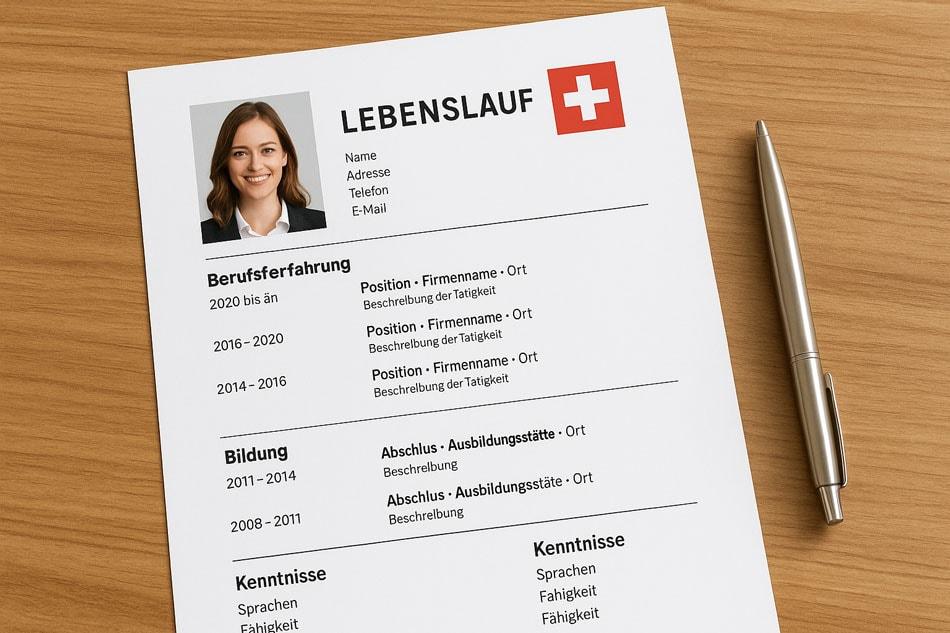
A practical structure for an international applicant can include:
- Contact information
- Professional profile
- Professional experience
- Education and qualifications
- Skills
- Language skills
- Certifications and relevant training
- Additional relevant information
The exact order can be adjusted depending on your experience and the position.
Choose a Clear CV Format
For most experienced applicants, a reverse-chronological CV is a practical option. Your most recent relevant position appears first, followed by earlier employment.
This allows recruiters to see your current professional level quickly.
Avoid overly complicated designs, excessive graphics or unusual layouts. Your CV should look professional and allow important information to be found easily.
Write a Strong Professional Profile
Your professional profile should immediately explain your professional identity and relevant experience.
For example:
Civil engineer with seven years of experience in residential and commercial construction, specializing in site supervision, project coordination and contractor management. Experienced in working with multidisciplinary teams and delivering projects within demanding deadlines.
This is stronger than beginning with:
“I am looking for a job in Switzerland and do not have Swiss work experience.”
Your lack of Swiss experience does not need to become the headline of your CV. Lead with what you can offer.
Present Your International Work Experience Clearly
Foreign employment should be treated as genuine professional experience when it is relevant to the vacancy.
A strong entry might look like:
Mechanical Technician
ABC Manufacturing Ltd — Ghana
2020–2025
- Maintained industrial machinery and production equipment.
- Performed preventive and corrective maintenance.
- Diagnosed equipment faults and supported production teams.
- Helped reduce recurring machinery downtime through improved maintenance procedures.
This approach gives the employer useful information without requiring previous Swiss employment.
Whenever possible, include achievements rather than responsibilities alone.
Instead of:
Managed warehouse inventory.
Use:
Managed warehouse inventory and introduced improved stock-monitoring procedures that reduced inventory discrepancies.
Only include figures you can verify. Do not invent percentages or performance statistics.
List Foreign Qualifications Properly
Foreign degrees, diplomas and certifications can be included on your CV when they are relevant to the position.
Provide:
- Qualification name.
- Institution.
- Country.
- Dates or completion year.
- Relevant specialization.
- Professional certification where applicable.
For example:
Bachelor of Science in Computer Science
University of Lagos — Nigeria
2019–2023
AWS Certified Cloud Practitioner
Amazon Web Services — 2025
Avoid claiming that a foreign qualification has been officially recognized in Switzerland unless you have actually completed the applicable recognition process.
This is particularly important for regulated professions, where specific recognition requirements may apply.
Highlight Relevant Skills
Your skills section should reflect the vacancy rather than becoming a long list of generic qualities.
Depending on the job, relevant skills may include:
- Technical skills.
- Industry-specific software.
- Machinery or equipment operation.
- Project management.
- Financial analysis.
- Customer service.
- Data analysis.
- IT systems.
- Quality control.
- Team supervision.
Transferable skills such as communication, problem-solving and adaptability can also be useful, but they are more convincing when supported by examples in your work history.
Instead of simply writing “excellent problem-solving skills,” show how you solved a professional problem.
Present Your Language Skills Honestly
Language ability can be particularly important when applying for jobs in Switzerland.
Depending on the position and location, employers may require German, French, Italian or English.
Create a dedicated language section and state your actual proficiency.
For example:
Languages
- English — C1
- German — B2
- French — B1
Do not exaggerate your ability. If an employer requires German and you claim fluency, you may be expected to communicate professionally during the recruitment process.
Where appropriate, explain how you use a language professionally, such as customer communication, technical documentation or workplace correspondence.
Include Relevant Personal Information Carefully
A Swiss-style CV may contain some personal information that applicants from other countries are not accustomed to including.

Depending on the application, this can include:
- Full name.
- Phone number.
- Professional email.
- Current location.
- LinkedIn profile.
- Professional photograph.
- Nationality.
- Date of birth.
- Relevant work authorization information.
These details should not be treated as universally mandatory. Most importantly, everything you provide must be accurate.
If you live outside Switzerland, do not create the impression that you already reside there. If work authorization is relevant to the vacancy, provide truthful information rather than trying to make your application appear more locally established than it is.
Tailor the CV to the Swiss Vacancy
Do not send exactly the same CV to every employer.
Before applying, identify the vacancy’s:
- Required qualifications.
- Technical skills.
- Experience requirements.
- Language requirements.
- Main responsibilities.
- Industry knowledge.
Then make your strongest matching experience easy to find.
If the employer emphasizes project management, put your project management achievements prominently. vacancy requires German, make your German proficiency immediately visible. If a specific technical system is required, clearly identify your experience with that system.
Tailoring your CV is one of the most effective ways to make international experience more relevant to a Swiss employer. How to Answer Accredited Employer Work Visa questions during an interview
4. Common CV Mistakes International Applicants Should Avoid When Applying in Switzerland
Even strong international candidates can weaken their applications through avoidable CV mistakes.
Using One Generic CV for Every Job
A generic CV may contain useful information, but it does not necessarily show why you are suitable for a particular vacancy. Adjust your professional profile, skills and experience according to the position.
Listing Duties Without Achievements
Simply describing what you were responsible for gives limited evidence of your performance. Where possible, show results, improvements, responsibilities handled or problems solved.
Hiding Foreign Work Experience
Do not remove relevant employment simply because it was outside Switzerland. International experience can still demonstrate valuable professional competence.
Exaggerating Language Ability
Claiming a higher language level than you actually possess can damage your credibility during recruitment. State your proficiency honestly.
Including Too Much Irrelevant Information
A CV should not contain every task, course or activity you have completed. Prioritize information that helps demonstrate your suitability for the specific vacancy.
Using Poor or Inconsistent Formatting
Different fonts, inconsistent dates, large blocks of text and crowded sections can make your CV difficult to scan. Keep the formatting simple, consistent and professional.
Making False Claims About Qualifications or Work Authorization
Never claim that a qualification has been officially recognized or that you have permission to work in Switzerland when that is not true. Accuracy is essential when applying internationally.
Failing to Proofread
Spelling errors, incorrect dates, wrong employer names or an unprofessional email address can make an otherwise qualified candidate appear careless.
Before submitting your CV, check every section carefully and make sure the information is accurate and directly relevant to the position.
5. How to Make a Swiss CV Stronger When You Have No Local Experience
You can strengthen your CV without Swiss work experience by making your existing qualifications and achievements more relevant to the position.
- Quantify achievements: Include measurable results where possible, such as team size, projects completed, sales generated, costs reduced or productivity improvements.
- Highlight relevant certifications: Include professional qualifications, technical certificates and recent training that directly support the job.
- Show language ability: Clearly state your German, French, Italian or English proficiency using an accurate level.
- Emphasize international experience: Mention work with international clients, multicultural teams or overseas projects when relevant.
- Include relevant projects: Freelance, academic or professional projects can demonstrate useful skills when they relate to the vacancy.
- Keep LinkedIn consistent: Make sure your LinkedIn profile and CV contain matching employment dates, qualifications and professional information.
- Tailor every application: Adjust your profile, skills and experience to match the specific Swiss job advertisement.
The goal is not to hide your lack of Swiss experience. Instead, use your CV to show why your international experience, qualifications and skills can transfer successfully to the role. Germany Skilled Jobs With Visa Sponsorship for Foreigners
6. References and Additional Resources
Evidence-Based and Official Resources
For current information about working in Switzerland, foreign qualifications and employment-related requirements, use official sources rather than relying entirely on general career blogs.
- Swiss Government — Working in Switzerland — Official information about working and employment-related matters in Switzerland.
- State Secretariat for Economic Affairs (SECO) — Swiss federal information on employment and economic matters.
- Swiss Federal Statistical Office — Official statistics and information about Switzerland’s labour market.
- Recognition of Foreign Qualifications — Useful for applicants who need to determine whether their foreign qualification requires recognition in Switzerland.
Professional Resources
- Europass — Provides European CV and career-development resources.
- Swissuniversities — Useful for information relating to Swiss higher education and qualifications.
Requirements can vary by profession, so applicants in regulated occupations should verify the applicable requirements with the relevant Swiss authority or professional organization.
7. Frequently Asked Questions About How to write a CV for Switzerland with no Swiss work experience
Can I get a job in Switzerland without Swiss work experience?
Yes. Swiss work experience is not automatically required for every position. Employers may consider relevant international experience, qualifications, language skills and professional achievements. However, specific professions and vacancies can have additional requirements.
How should I list foreign work experience on a Swiss CV?
List relevant international employment normally, including your job title, employer, country, dates, responsibilities and achievements. Do not hide the country where you gained the experience. Focus on explaining why the experience is relevant to the Swiss position.
Do I need a photo on a Swiss CV?
A professional photograph may be included on a Swiss CV, but it should not automatically be treated as a mandatory requirement for every application. If you include one, use a professional photograph rather than a casual personal picture.
How long should a Swiss CV be?
The appropriate length depends on your experience and the position. A recent graduate may need less space than a senior professional. The priority should be relevant information, clear organization and easy readability rather than reaching an arbitrary number of pages.
Should I include my nationality on my Swiss CV?
Nationality can be included in some Swiss-style CVs, but it is not something every applicant must automatically provide. If work authorization is relevant to the vacancy, provide accurate information about your situation rather than trying to conceal it.
How should I show language skills on my CV?
Create a dedicated language section and state your proficiency accurately. Where appropriate, use recognized levels such as A1, A2, B1, B2, C1 or C2. Pay particular attention to languages specifically requested in the job advertisement.
Should I mention my work permit or visa status?
If your right to work in Switzerland is relevant to the position, concise and accurate information can be useful. Do not make false claims about your immigration or work status. Follow any specific instructions provided by the employer.
Can I include foreign qualifications on a Swiss CV?
Yes. Relevant foreign degrees, diplomas and professional certifications should generally be included. Give the qualification, institution, country and relevant dates. If your profession is regulated, separately check whether Swiss recognition is required.
8. Conclusion: How to write a CV for Switzerland with no Swiss work experience
Not having Swiss work experience does not mean you have nothing valuable to offer a Swiss employer. How to write a CV for Switzerland with no Swiss work experience, Your previous international employment, qualifications, technical abilities, language skills and professional achievements can still provide strong evidence of your suitability.
The key is to present that experience clearly and honestly. Do not hide foreign employment, invent Swiss experience or exaggerate qualifications. Instead, identify the parts of your background that directly match the vacancy and make those strengths easy for the recruiter to find.
Your CV should also be tailored to each position. A Swiss employer should not have to search through unrelated information to discover why you are suitable. Study the job advertisement, identify its most important requirements and adjust your professional profile, experience and skills accordingly.
Action Plan for Your First Swiss Job Application
Before submitting your CV, follow these steps:
1. Choose a specific target position.
Know exactly what type of Swiss job you are applying for.
2. Study the vacancy.
Identify the required experience, qualifications, skills and languages.
3. Select relevant international experience.
Prioritize previous roles that demonstrate abilities needed for the position.
4. Rewrite your professional profile.
Make your profession, experience and strongest qualifications immediately clear.
5. Highlight achievements.
Replace long lists of duties with specific contributions and measurable results where possible.
6. Organize your qualifications.
Clearly list relevant degrees, diplomas, certifications and professional training.
7. Present your languages honestly.
Use accurate proficiency levels and highlight languages requested by the employer.
8. Check your personal information.
Make sure your contact details, location and any work-authorization information are accurate.
9. Tailor the CV.
Remove irrelevant information and emphasize experience that matches the particular vacancy.
10. Proofread everything.
Check spelling, grammar, employment dates, qualifications and contact details before submitting.
A strong Swiss CV does not need to pretend that you already have local experience. It needs to make a convincing case for the experience and value you already bring.


 Admin
Admin