 Admin
AdminComplete Guide to Applying for a U.S. visa in 2026
1. Introduction
Every year, millions of people around the world apply for a U.S. visa to visit family, pursue higher education, attend business meetings, accept employment opportunities, receive medical treatment, or immigrate permanently. Complete Guide to Applying for a U.S. visa in 2026, While the United States remains one of the most sought-after destinations, the visa application process can be challenging, especially for first-time applicants. In 2026, understanding the correct procedures, preparing accurate documentation, and following official guidelines are more important than ever.
A successful visa application depends on more than simply filling out forms. Applicants must select the correct visa category, demonstrate that they meet eligibility requirements, prepare supporting evidence, attend interviews when required, and comply with U.S. immigration laws. Small errors—such as inconsistent information, missing documents, or applying under the wrong visa category—can result in delays or even refusal.
This Complete Guide to Applying for a U.S. visa in 2026 explains every major step of the application process in clear, practical language. Whether you are planning to travel temporarily or immigrate permanently, this guide will help you understand visa types, eligibility requirements, documentation, application procedures, interview preparation, and best practices for improving your chances of a successful outcome. U.S. Citizenship Through Naturalization Explained
2. Why Applying for a U.S. visa in 2026 Requires Proper Preparation
Applying for a U.S. visa involves more than submitting an application and waiting for a decision. The process is designed to verify that applicants meet the legal requirements for the visa category they are requesting. Careful preparation helps reduce mistakes and ensures that your application presents accurate and consistent information.
One of the most common reasons for delays is incomplete documentation. Missing financial records, expired passports, incorrect photographs, or inconsistent travel information can slow processing or require additional documentation. Taking time to prepare your application thoroughly helps minimize these risks.
Visa policies and processing procedures may also evolve over time. Requirements can vary depending on the visa category, your country of residence, and the U.S. embassy or consulate handling your application. Reviewing the latest official guidance before applying helps ensure your application reflects current procedures.
Proper preparation also allows applicants to:
- Choose the correct visa category.
- Gather all required supporting documents.
- Avoid preventable application errors.
- Prepare confidently for visa interviews.
- Understand expected processing timelines.
- Respond quickly if additional information is requested.
Applicants who understand the process are generally better positioned to navigate each stage efficiently and avoid unnecessary complications. Top Interview Questions Asked by U.S. Employers and How to Answer Them
3. Complete Guide to Applying for a U.S. visa in 2026
Understanding the Different Types of U.S. Visas
Before beginning your application, determine which visa category matches the purpose of your trip. Applying for the wrong visa can lead to delays or refusal.
Nonimmigrant Visas
These visas are intended for individuals visiting the United States temporarily. Common reasons include tourism, business, education, temporary employment, medical treatment, or cultural exchange. Applicants are generally expected to demonstrate that they intend to return to their home country after their authorized stay.

Immigrant Visas
Immigrant visas are designed for individuals who intend to live permanently in the United States. These visas may be based on family sponsorship, employment, investment, or other qualifying immigration pathways.
Visitor Visas
Visitor visas are commonly used for tourism, vacations, family visits, medical treatment, and certain business activities. Applicants should clearly demonstrate the purpose and duration of their visit.
Student Visas
International students accepted by eligible educational institutions may qualify for student visas. Applicants must generally provide proof of admission, financial support, and compliance with student visa requirements.
Work Visas
Several visa categories allow qualified professionals, skilled workers, seasonal employees, researchers, and other workers to enter the United States for authorized employment. Eligibility depends on the specific visa category and employment circumstances.
Family-Sponsored Visas
U.S. citizens and eligible permanent residents may sponsor qualifying family members for immigration under applicable immigration laws.
Employment-Based Immigrant Visas
Some permanent immigration pathways are available to workers with specialized skills, professional qualifications, or employer sponsorship.
Exchange Visitor Visas
Exchange visitor programs support educational, research, training, teaching, and cultural exchange opportunities.
Transit Visas
Transit visas are available for travelers passing through the United States while traveling to another destination under qualifying circumstances.
Determine Which U.S. Visa You Need
Selecting the correct visa category is one of the most important decisions in the application process.
Ask yourself questions such as:
- Why am I traveling?
- How long will I stay?
- Will I study, work, visit family, or attend business meetings?
- Do I intend to immigrate permanently?
- Am I eligible for sponsorship?
Your answers will help determine which visa category best matches your circumstances. If you are unsure, carefully review the eligibility requirements before submitting your application.
Check Your Eligibility Before Applying
Every visa category has specific eligibility requirements.
Depending on the visa type, applicants may need to demonstrate:
- A legitimate travel purpose.
- Sufficient financial resources.
- Strong ties to their home country (for many temporary visas).
- Educational qualifications.
- Employment experience.
- Family relationships.
- Employer sponsorship where required.
- Good immigration history.
- Compliance with previous U.S. immigration rules.
Reviewing eligibility early helps prevent wasted application fees and unnecessary delays.
Gather the Required Documents
Preparing your documentation carefully is one of the best ways to improve the efficiency of your application.
Common documents include:
- A valid passport with sufficient validity.
- Recent passport-sized photographs that meet official specifications.
- Completed visa application forms.
- Visa fee payment confirmation.
- Appointment confirmation.
- Financial evidence demonstrating the ability to support your trip.
- Employment records where applicable.
- Admission documents for students.
- Invitation letters when required.
- Marriage or birth certificates for qualifying family applications.
- Travel itinerary if applicable.
- Previous passports or travel history where requested.
Ensure that every document is accurate, current, and consistent with the information provided in your application.
Complete the Visa Application Form Correctly
Many visa applications require applicants to complete official forms online before scheduling an appointment.
When completing your application:
- Answer every question honestly.
- Use information that matches your supporting documents.
- Double-check names, dates, passport numbers, and addresses.
- Avoid abbreviations unless requested.
- Do not leave required fields blank.
- Review the completed application carefully before submission.
Even small inconsistencies can result in additional scrutiny or processing delays.
Pay the Required Visa Fees
Most visa categories require applicants to pay a non-refundable processing fee before scheduling an interview.
Before making payment:
- Confirm the correct fee for your visa category.
- Use an approved payment method.
- Keep your payment receipt.
- Understand whether additional fees may apply.
- Review local payment instructions provided by the embassy or consulate serving your region.
Retaining proof of payment is important because it may be required during later stages of the application process.
Schedule Your Visa Interview
Many applicants between certain age groups are required to attend an interview at a U.S. embassy or consulate.
Appointments may become unavailable during busy travel seasons, so scheduling early is recommended.
Before your interview:
- Confirm the appointment details.
- Organize your supporting documents.
- Review your application responses.
- Arrive early on the scheduled date.
- Follow security instructions at the embassy or consulate.
Being organized helps the interview proceed smoothly.
Prepare for the U.S. Visa Interview
The interview allows a consular officer to verify your eligibility and better understand the purpose of your travel.
Preparation includes:
- Reviewing your submitted application.
- Practicing concise and truthful answers.
- Bringing all required documents.
- Dressing neatly and professionally.
- Remaining calm and respectful.
- Answering only the questions asked.
- Avoiding unnecessary or contradictory information.
Common interview topics may include:
- Purpose of travel.
- Employment or education.
- Financial support.
- Family ties.
- Intended length of stay.
- Previous international travel.
- Plans after returning home (for temporary visas).
Confidence comes from preparation rather than memorizing responses.
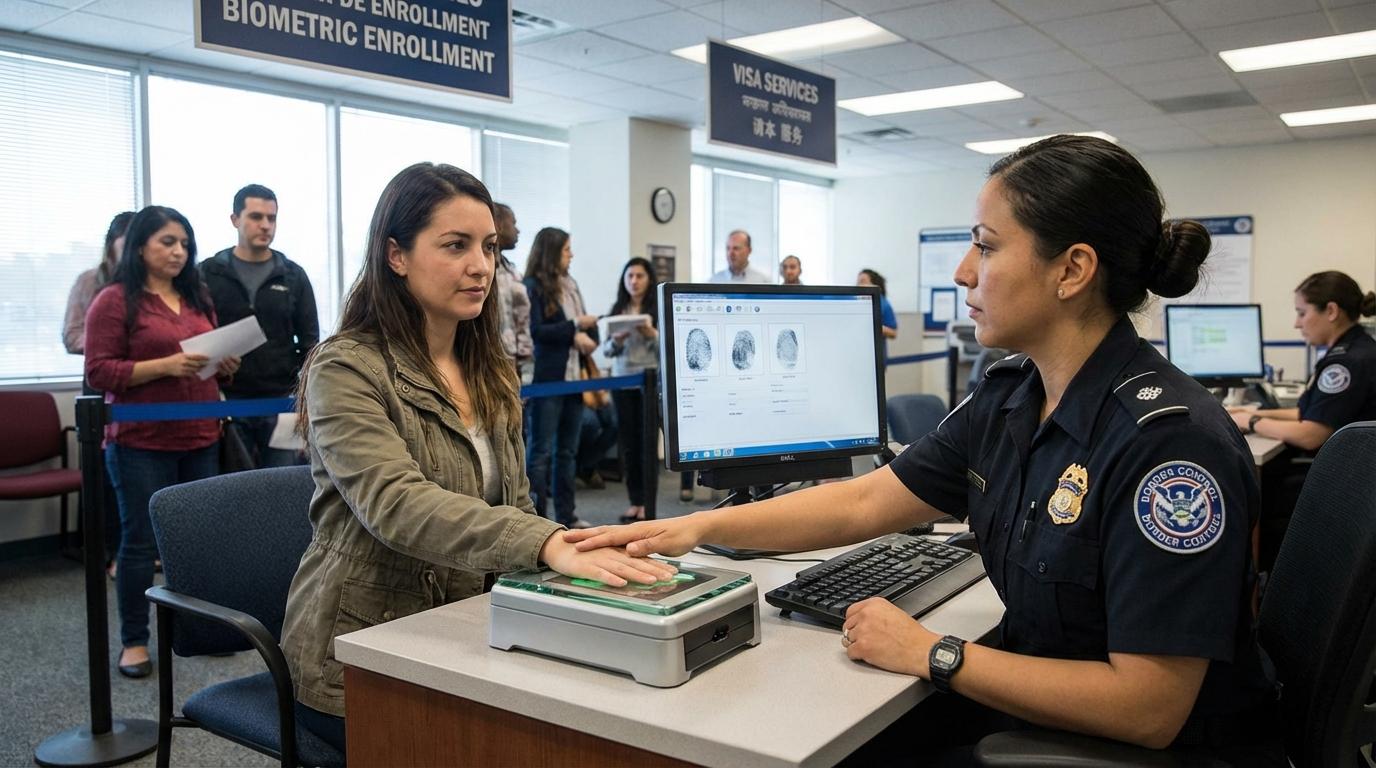
Attend Biometrics Appointment (If Required)
Some applicants may be required to complete biometric processing as part of their application.

Biometric collection may include:
- Fingerprints.
- Digital photographs.
- Identity verification.
Attend the appointment on time and bring any required identification documents.
Track Your U.S. Visa Application Status
After completing the required steps, applicants can generally monitor the progress of their application through official channels.
Processing times vary based on:
- Visa category.
- Seasonal demand.
- Embassy workload.
- Additional administrative processing.
- Requests for further documentation.
While waiting:
- Monitor official status updates.
- Respond promptly if additional information is requested.
- Avoid making irreversible travel plans until your visa has been issued.
What Happens After Visa Approval
Receiving visa approval is an important milestone, but applicants should carefully review their visa before traveling.
Check:
- Name spelling.
- Passport number.
- Visa category.
- Validity dates.
- Number of permitted entries.
Before departure:
- Keep important documents accessible.
- Understand the conditions attached to your visa.
- Be prepared to answer routine questions when arriving at a U.S. port of entry.
A visa allows you to travel to a U.S. port of entry, where an immigration officer determines whether you may be admitted under the terms of your visa.
What to Do if Your U.S. Visa Is Refused
A refusal does not always mean you can never obtain a U.S. visa.
If your application is refused:
- Read the refusal notice carefully.
- Understand the reason provided.
- Correct any issues where possible.
- Gather stronger supporting evidence if you plan to reapply.
- Ensure future applications are complete and accurate.
Each application is assessed individually, so careful preparation for a future application can help address previous weaknesses. Unskilled Jobs in Switzerland with Visa Sponsorship
4. Pros and Cons of Applying for a U.S. Visa
Advantages
Access to World-Class Education
The United States is home to many internationally recognized universities, research institutions, and specialized training programs.
Career Opportunities
Many visa pathways support skilled professionals, researchers, entrepreneurs, and temporary workers seeking valuable international experience.
Business Expansion
Business travelers can attend conferences, negotiate partnerships, explore investments, and strengthen international business relationships.
Family Reunification
Eligible immigration pathways enable families to reunite under established U.S. immigration programs.
Tourism and Cultural Experiences
Visitors can experience diverse cultures, iconic landmarks, national parks, museums, entertainment, and regional attractions across the country.
Professional Development
Academic exchanges, conferences, internships, and training opportunities help applicants expand their knowledge and professional networks.
Challenges
Lengthy Processing Times
Some visa categories may require extended processing depending on demand and application complexity.
Strict Documentation Requirements
Applicants must submit complete and accurate supporting documents that satisfy eligibility requirements.
Application Costs
Visa fees, document preparation, translations, medical examinations (where required), and travel expenses can increase the overall cost of applying.
Interview Requirements
Many applicants must attend interviews and clearly explain the purpose of their travel while demonstrating eligibility.
Possibility of Refusal
Even well-prepared applications may be refused if eligibility requirements are not met or sufficient supporting evidence is unavailable.
Understanding both the advantages and challenges allows applicants to prepare realistically and approach the visa process with greater confidence.
5. Common Mistakes to Avoid When Applying for a U.S. Visa in 2026
Even qualified applicants can experience delays or visa refusals because of avoidable mistakes. Careful preparation and attention to detail can significantly improve the quality of your application and reduce unnecessary complications.
Applying for the Wrong Visa Category
One of the most common mistakes is selecting a visa category that does not match the purpose of your trip. For example, applying for a tourist visa when your primary purpose is studying or working may lead to a refusal if the information provided conflicts with your stated intentions.
Before beginning your application, carefully review the available visa categories and confirm which one best suits your travel plans. If your circumstances are unique, consult the official eligibility requirements to avoid applying under the wrong classification.
Providing Inaccurate or Inconsistent Information
All information submitted during the application process should be truthful and consistent across every document.
Differences in names, employment history, travel dates, educational background, or financial information may raise questions during the review process. Even minor inconsistencies can result in requests for additional evidence or delays.
Always review your application several times before submission to ensure that every detail matches your supporting documents.
Submitting Incomplete Documentation
Missing documents are among the leading causes of delayed visa processing.
Applicants sometimes forget to include financial statements, employment verification letters, educational records, invitation letters, or civil documents required for their visa category.
Create a document checklist before submitting your application and verify that every required item is complete, current, and properly organized.
Using Expired or Invalid Documents
An expired passport or outdated supporting documents can delay your application or make you ineligible to proceed.
Ensure that your passport meets the required validity period and that any certificates, financial documents, or official records reflect your current circumstances.
Waiting Until the Last Minute
Many applicants underestimate how long visa processing may take.
Appointment availability, document collection, administrative processing, and seasonal demand can all affect processing times. Applying well in advance of your intended travel date gives you enough time to respond to unexpected requests for additional information.
Ignoring Embassy or Consulate Instructions
Different U.S. embassies and consulates may have location-specific procedures for document submission, appointments, or security requirements.
Carefully read all instructions provided by the embassy or consulate responsible for your application and follow them exactly.
Providing Fraudulent Documents
Submitting altered, false, or misleading information is a serious violation of U.S. immigration rules.
Fraudulent documents can result in visa refusal and may affect future immigration applications. Always provide genuine documentation and truthful information throughout the process.
Poor Interview Preparation
Applicants sometimes attend visa interviews without understanding their own application or preparing for common questions.
Review your application beforehand, organize your documents, and practice answering questions honestly and confidently. Being well prepared demonstrates credibility and helps the interview proceed more smoothly.
Failing to Demonstrate Strong Supporting Evidence
For many temporary visa categories, applicants are expected to provide evidence that supports the purpose of their visit and demonstrates their intention to comply with visa conditions.
Depending on the visa category, supporting evidence may include employment records, educational enrollment, financial documentation, property ownership, family relationships, or travel history.
Providing organized and relevant documentation helps the reviewing officer better understand your circumstances.
Not Monitoring Your Application After Submission
Some applicants assume their work is complete once the application has been submitted.
However, embassies or consulates may request additional documentation or schedule further appointments. Regularly checking your application status ensures you can respond promptly if action is required. How to Write a U.S.-Style Resume for Jobs in America
6. References and Additional Resources
Evidence-Based References
- U.S. Department of State – Bureau of Consular Affairs: https://travel.state.gov
- U.S. Citizenship and Immigration Services (USCIS): https://www.uscis.gov
- U.S. Customs and Border Protection (CBP): https://www.cbp.gov
- USA.gov – Immigration and Citizenship Information: https://www.usa.gov/immigration
- U.S. Embassy and Consulate Websites: https://www.usembassy.gov
Professional Resources
- Visa Appointment and Application Information Portal (Official U.S. Visa Services)
- Official U.S. Travel Advisory Information
7. Frequently Asked Questions (FAQ) About Applying for a U.S. visa
1. How early should I apply for a U.S. visa in 2026?
It is advisable to begin your application several months before your planned travel date. This allows sufficient time for document preparation, appointment scheduling, interviews, and any additional administrative processing.
2. How long does U.S. visa processing usually take?
Processing times vary depending on the visa category, the U.S. embassy or consulate handling the application, seasonal demand, and whether additional administrative review is required.
3. Can I apply for a U.S. visa without an invitation letter?
Yes. Many visa categories do not require an invitation letter. The required supporting documents depend on the purpose of your travel and the specific visa classification you are applying for.
4. What happens if my U.S. visa application is refused?
A visa refusal does not necessarily prevent you from applying again in the future. Carefully review the reason for the refusal, address any issues identified, and ensure that any future application includes complete and accurate supporting documentation.
5. Do I need to attend a visa interview?
Many applicants are required to attend an interview, although some individuals may qualify for interview waivers depending on their circumstances and current policies.
6. Can I check the status of my visa application online?
Yes. Most applicants can monitor the progress of their application through the official visa status tracking services provided by the U.S. Department of State or the relevant U.S. embassy or consulate.
7. Does obtaining a visa guarantee entry into the United States?
No. A visa allows you to travel to a U.S. port of entry, where a U.S. Customs and Border Protection officer determines whether you meet the requirements for admission.
8. Can I apply for another visa category if my plans change?
Yes, provided you meet the eligibility requirements for the new visa category. You may need to submit a new application and complete the required procedures for that classification. Cybersecurity Jobs in Luxembourg with Visa Sponsorship
8. Conclusion: Complete Guide to Applying for a U.S. visa in 2026
Applying for a U.S. visa may appear complex at first, but understanding the process step by step can make it much more manageable. From selecting the correct visa category and preparing accurate documentation to attending interviews and monitoring your application, every stage plays an important role in achieving a successful outcome.
This Complete Guide to Applying for a U.S. visa in 2026 has outlined the essential information you need to prepare confidently and avoid many of the common mistakes that delay applications. While every applicant’s situation is unique, following official instructions, remaining honest throughout the process, and submitting complete documentation will significantly improve your overall application experience.
Remember that immigration policies and processing procedures may change over time. Before submitting your application, always verify the latest requirements through official U.S. government sources to ensure that your information is current.
Whether your goal is tourism, education, employment, business, or permanent immigration, careful preparation is one of the most valuable investments you can make before beginning your journey.
Action Plan for Getting Started Today
If you are applying for a U.S. visa in 2026, consider taking the following steps today:
- Identify the visa category that matches your travel purpose.
- Review the latest eligibility requirements for that visa.
- Ensure your passport is valid and meets the required validity period.
- Begin collecting supporting documents early.
- Prepare evidence of your financial ability and travel purpose where applicable.
- Complete your application carefully and accurately.
- Schedule your interview as soon as appointments become available.
- Keep copies of every document you submit.
- Monitor your application regularly for updates or additional requests.
- Rely only on official U.S. government resources for application guidance.
By following these practical steps, you can approach the application process with greater confidence and improve your chances of a smooth and successful experience.


 Admin
Admin