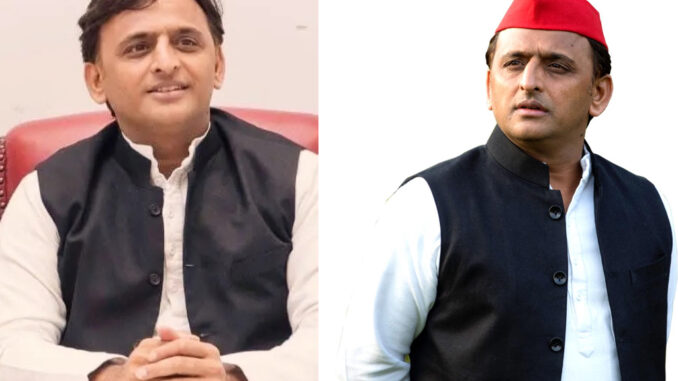
Akhilesh Yadav became Uttar Pradesh’s youngest chief minister in 2012, aged just 38. Five years later, he lost power after a bitter family dispute that divided the Samajwadi Party. But his political career did not end there. In the 2024 general election, his party won 37 Lok Sabha seats in Uttar Pradesh, its highest-ever tally in a parliamentary election. This Akhilesh Yadav biography follows his rise, electoral setbacks and return to national prominence as he prepares his party for the 2027 state election.
Born in Saifai, a village in Uttar Pradesh’s Etawah district, Yadav grew up surrounded by politics. His father, Mulayam Singh Yadav, founded the Samajwadi Party and served three times as the state’s chief minister. Akhilesh studied engineering in India and Australia before entering Parliament in 2000. He later introduced major road, transport and welfare projects as chief minister, although his government also faced criticism over law and order and its handling of communal violence.
Today, Yadav leads the Samajwadi Party and represents Kannauj in the Lok Sabha. He is married to fellow politician Dimple Yadav, and they have three children. In October 2026, he has been campaigning on electoral issues, managing discussions with Congress and publicly challenging Chief Minister Yogi Adityanath over the coming Assembly election. These developments have placed him at the centre of Uttar Pradesh’s next major political contest.
Akhilesh Yadav Quick Facts
| Detail | Information |
|---|---|
| Full name | Akhilesh Yadav |
| Date of birth | July 1, 1973 |
| Age | 53 years old (October 2026) |
| Birthplace | Saifai, Etawah district, Uttar Pradesh, India |
| Nationality | Indian |
| Profession | Politician and former engineer |
| Political party | Samajwadi Party (SP) |
| Current position | Samajwadi Party president and Lok Sabha MP |
| Constituency | Kannauj, Uttar Pradesh |
| Father | Mulayam Singh Yadav (1939–2022) |
| Mother | Malti Devi |
| Wife | Dimple Yadav |
| Marriage date | November 24, 1999 |
| Children | Three: Aditi, Arjun and Tina |
| Education | University of Mysore; University of Sydney |
| Former position | Chief Minister of Uttar Pradesh (2012–2017) |
| First parliamentary election victory | 2000 |
His birth date, parents, marriage and children are recorded in the Uttar Pradesh Legislative Assembly’s official biography.
Early Life and Family Background
Akhilesh Yadav was born on July 1, 1973, in Saifai, a village in Uttar Pradesh’s Etawah district.
His father, Mulayam Singh Yadav, was a politician who later became one of the state’s most influential political figures. His mother was Malti Devi, Mulayam’s first wife.
Mulayam served as Uttar Pradesh’s chief minister on three occasions and established the Samajwadi Party in 1992. He also served as India’s Union Defence Minister from 1996 to 1998.
Growing up in this environment meant Akhilesh was familiar with political meetings, party workers and election campaigns from a young age.
However, he did not immediately pursue a political career. His early interests included science, engineering and technology.
He eventually left Uttar Pradesh for his education, first attending school in Rajasthan and then pursuing university studies.
Akhilesh Yadav’s Education and Qualifications
Yadav attended Dholpur Military School in Rajasthan, an institution known today as Rashtriya Military School, Dholpur.
He later studied civil environmental engineering at the University of Mysore in Karnataka.
His 2024 election affidavit records a Bachelor of Engineering qualification in Civil Environment from the University of Mysore, completed during the 1994–1995 academic period.
The Samajwadi Party’s official biography also states that he earned a master’s degree in Civil Environmental Engineering from the University of Sydney, Australia.
His years studying away from home gave him experience outside Uttar Pradesh before he entered electoral politics.
His engineering background later became part of his public identity, particularly during his time as chief minister, when he promoted infrastructure development and technology-related programmes.
How Akhilesh Yadav Started His Political Career
Akhilesh Yadav entered electoral politics in 2000, when he contested a Lok Sabha by-election from Kannauj.
The seat had become vacant after his father, Mulayam Singh Yadav, resigned from it.
Akhilesh won the by-election and entered Parliament at the age of 26.
During his early parliamentary years, he worked on committees dealing with food distribution, science, technology, urban development and environmental issues.
He was re-elected to the Lok Sabha in 2004 and 2009.
Those parliamentary terms gave him political experience before he moved into state government leadership.
By the 2012 Uttar Pradesh Assembly election, he had become a leading public face of the Samajwadi Party’s campaign.
Becoming Uttar Pradesh’s Youngest Chief Minister
The Samajwadi Party won 224 of the 403 Assembly seats in the 2012 Uttar Pradesh election.
Although Mulayam Singh Yadav was the party’s founder and senior leader, Akhilesh was chosen to head the new state government.
On March 15, 2012, he took the oath as chief minister, becoming the youngest person to hold the position in Uttar Pradesh.
He was 38 years old.
His appointment represented a generational change in the Samajwadi Party’s leadership.
During his election campaign, he had emphasised education, technology, employment and infrastructure alongside the party’s traditional focus on farmers and disadvantaged communities.
His government remained in office until March 19, 2017.
Major Projects During His Time as Chief Minister
Akhilesh Yadav’s administration is associated with several major infrastructure and welfare programmes introduced between 2012 and 2017.
Agra-Lucknow Expressway
One of his government’s most prominent projects was the Agra-Lucknow Expressway.
The approximately 302-kilometre highway connects Agra with Lucknow and was designed to reduce travel times between the two cities.
It was inaugurated in November 2016, with Indian Air Force aircraft participating in a demonstration on the expressway.
The road became a major part of the Samajwadi Party’s 2017 campaign message.
Lucknow Metro
His government also began developing the Lucknow Metro rail system.
Construction progressed during his administration, and he participated in the inauguration of the first train before the 2017 state election.
Regular passenger services began in September 2017, after his government had left office.
This distinction matters because the development and later operation of the project occurred under different administrations.
Free Laptop Distribution Scheme
The free laptop programme was among his government’s best-known education initiatives.
The scheme provided laptops to eligible students who had completed secondary or higher-secondary education.
Its stated purpose was to improve access to technology and digital learning.
However, the programme also attracted criticism over implementation and equipment quality. In 2017, India Today reported complaints from some recipients about laptop faults and repair costs.
The programme illustrates both the technology-focused goals of his administration and the difficulties of carrying out large public distribution schemes.
Other Welfare and Public Services
His government also introduced or expanded programmes involving:
- Women Power Line 1090: A helpline designed to assist women reporting harassment.
- UP-100: A state police emergency response programme.
- Samajwadi Pension Scheme: Financial assistance aimed at economically vulnerable households.
- Janeshwar Mishra Park: A large public park developed in Lucknow.
- Emergency ambulance services: Efforts to improve access to medical transport across the state.
A 2017 investigation by The Indian Express compared the government’s development record with its earlier election promises. It found that some major projects had progressed, while other commitments remained incomplete or were only partly fulfilled.
Criticism of His Government and the 2013 Muzaffarnagar Riots
Akhilesh Yadav’s time as chief minister was also marked by serious criticism over law and order.
One of the most significant events was the 2013 communal violence in Muzaffarnagar and surrounding areas.
The violence left more than 60 people dead and displaced thousands of residents.
The state government’s response attracted criticism from human rights organisations, particularly over the treatment of displaced families.
In January 2014, Human Rights Watch reported that families displaced by the violence had received inadequate assistance and alleged that authorities were forcing residents to leave relief camps.
The allegations raised important questions about how the government protected vulnerable communities and managed the aftermath of communal violence.
Separately, political opponents criticised his administration over policing, corruption allegations and delays in public projects.
Yadav defended his government’s development efforts and argued that opposition parties were overlooking its achievements.
His record as chief minister therefore includes both documented infrastructure programmes and serious disputes over governance and public safety.
The Family Dispute That Changed the Samajwadi Party
A major turning point in Yadav’s political career came during the 2016–2017 dispute within the Samajwadi Party.
Differences emerged between Akhilesh, his father Mulayam Singh Yadav and his uncle Shivpal Singh Yadav.
The disagreement involved party appointments, election candidates and control over the organisation.
On January 1, 2017, a party convention declared Akhilesh the Samajwadi Party’s national president, replacing Mulayam Singh.
Mulayam was given the position of party patron.
The leadership change came shortly before the Uttar Pradesh Assembly election.
The India Today report published on January 1, 2017 documented the leadership transition.
The Samajwadi Party subsequently contested the election in alliance with the Congress but lost power to the BJP-led alliance.
Akhilesh remained the Samajwadi Party’s president and continued leading its electoral campaigns.
Election Defeats and the Road Back to Parliament
After losing the 2017 state election, Yadav faced several years of difficult electoral results.
The Samajwadi Party formed an alliance with the Bahujan Samaj Party for the 2019 general election, but the partnership did not produce the result the parties had sought.
In 2022, he contested the Uttar Pradesh Assembly election from Karhal in Mainpuri district and won.
Although the BJP retained power, the Samajwadi Party increased its Assembly representation from 47 seats in 2017 to 111 in 2022.
Yadav became Leader of the Opposition in the Uttar Pradesh Legislative Assembly in March 2022.
He later returned to the Lok Sabha following the 2024 general election.
Akhilesh Yadav’s Major Election Milestones
The following timeline shows how his career developed from a newly elected MP to chief minister and national opposition leader.
| Year | Election or position | Result or significance |
|---|---|---|
| 2000 | Kannauj Lok Sabha by-election | Won his first parliamentary election |
| 2004 | Lok Sabha election | Re-elected from Kannauj |
| 2009 | Lok Sabha election | Returned to Parliament |
| 2012 | Uttar Pradesh Assembly election | SP won 224 seats; became chief minister |
| 2017 | Uttar Pradesh Assembly election | SP won 47 seats and lost power |
| 2019 | Lok Sabha election | Elected from Azamgarh |
| 2022 | Uttar Pradesh Assembly election | Won Karhal; SP secured 111 seats |
| 2024 | Lok Sabha election | Won Kannauj; SP secured 37 seats in Uttar Pradesh |
| 2026 | 18th Lok Sabha | Serving as MP for Kannauj |
How Akhilesh Yadav Performed in the 2024 Lok Sabha Election
The 2024 general election marked a major change in the Samajwadi Party’s national representation.
Yadav contested the Kannauj Lok Sabha seat against BJP candidate Subrat Pathak.
He received 642,292 votes, compared with Pathak’s 471,370 votes, winning by a margin of 170,922.
The result was recorded by The Indian Express using Election Commission data.
Across Uttar Pradesh, the Samajwadi Party won 37 of the state’s 80 Lok Sabha seats. Its ally, the Congress, won six.
The result increased the SP’s representation in Parliament and gave Yadav a larger role in the national opposition.
What Is Akhilesh Yadav’s PDA Strategy?
Yadav’s party promoted an electoral approach known as PDA, standing for Pichhda, Dalit and Alpsankhyak.
The terms refer broadly to backward communities, Dalits and minorities.
The strategy sought to build support among groups the party believed were underrepresented in political and economic decision-making.
Its campaign issues included employment, education, social representation, constitutional protections and demands for a caste census.
The BJP campaigned on a different combination of issues, including government programmes, development and its record in office.
Analysts have examined the PDA approach as one factor in the SP’s improved performance, alongside alliance arrangements, local candidates and voter concerns.
The Indian Express’ June 2024 election analysis examined the party’s messaging and cooperation with Congress.
Akhilesh Yadav’s Latest News and 2027 Election Plans
As of October 9, 2026, Yadav is concentrating much of his political activity on preparations for the next Uttar Pradesh Assembly election, expected in 2027.
His October 2026 Statement on the SP-Congress Alliance
In early October 2026, public disagreements emerged between Samajwadi Party and Congress leaders over the distribution of Assembly constituencies.
Yadav called on party leaders to concentrate on their shared electoral objectives rather than argue publicly about individual seats.
On October 3, he said that the existing political alliance would continue into the 2027 election.
The statement was reported by Hindustan Times.
The alliance’s eventual constituency allocations will depend on negotiations between the parties. No final statewide seat-sharing agreement was established in the reports reviewed.
Why the SP Did Not Field a Third Rajya Sabha Candidate
Another development emerged ahead of the October 2026 Rajya Sabha elections in Uttar Pradesh.
The Samajwadi Party decided not to field a third candidate after nominating two.
On October 6, 2026, Yadav said his party’s attention was on all 403 seats in the Uttar Pradesh Legislative Assembly rather than trying to win an additional Rajya Sabha seat.
Political observers linked the decision to concerns about cross-voting and the party’s priorities ahead of 2027.
Those interpretations were examined in an October 2026 report by The Indian Express.
His October 9 Challenge to Yogi Adityanath
On October 9, 2026, news reports described Yadav’s remarks during a visit to Ayodhya.
He publicly challenged Uttar Pradesh Chief Minister Yogi Adityanath to contest the 2027 Assembly election from Ayodhya.
Yadav made the remarks while attending a religious programme organised by Samajwadi Party leader Pawan Pandey.
He also said that he intended to visit the Ram temple after the completion of the Kedareshwar temple project in Etawah.
The visit and challenge were documented by The Indian Express on October 9, 2026.
These statements are part of the political exchanges taking place before the election. They do not establish which candidate will ultimately contest Ayodhya or determine the election’s outcome.
Who Is Akhilesh Yadav’s Wife?
Akhilesh Yadav is married to Dimple Yadav, an Indian politician and Lok Sabha member.
The couple married on November 24, 1999.
Dimple was born on January 15, 1978, in Pune, Maharashtra. Her father, Ram Chandra Singh Rawat, served in the Indian Army.
She studied at Lucknow University, where she earned a Bachelor of Commerce degree.
Dimple later entered politics through the Samajwadi Party and represented Kannauj in the Lok Sabha.
She currently represents Mainpuri, a constituency that was previously held by her father-in-law, Mulayam Singh Yadav.
Her education, marriage and current parliamentary position are confirmed in the Lok Sabha’s official biography.
The couple are both active political figures, but they represent different parliamentary constituencies and have their own political responsibilities.
How Many Children Does Akhilesh Yadav Have?
Akhilesh Yadav and Dimple Yadav have three children.
- Aditi Yadav: Their eldest daughter.
- Arjun Yadav: Their son and one of the younger twins.
- Tina Yadav: Their younger daughter and Arjun’s twin sister.
The children’s names are listed in the Uttar Pradesh Legislative Assembly’s official biography of their father.
Aditi has appeared at some public and political events connected to her family, although her personal and professional future should not be assumed from those appearances.
The family occasionally appears together at public functions, but much of the children’s personal lives remains private.
His Relationship with Mulayam Singh Yadav
Mulayam Singh Yadav played an important role in his son’s entry into politics.
As the founder of the Samajwadi Party, Mulayam established the political organisation that Akhilesh later came to lead.
However, their relationship as political leaders was not always smooth.
The 2016–2017 party dispute showed that they differed over the organisation’s leadership and political direction.
Despite that disagreement, their careers remained closely connected through the Samajwadi Party and the family’s political base in Uttar Pradesh.
Mulayam Singh Yadav died on October 10, 2022, aged 82.
Akhilesh subsequently continued leading the party his father had founded three decades earlier.
What Is Akhilesh Yadav’s Net Worth?
Akhilesh Yadav’s exact personal net worth in October 2026 has not been independently established through current financial records.
However, his 2024 Lok Sabha election affidavit declared total assets of approximately ₹42.03 crore, covering the financial disclosures recorded for him and his spouse.
The same filing listed approximately ₹99.86 lakh in total liabilities.
These amounts come from his public election affidavit, reproduced by the Association for Democratic Reforms through MyNeta.
It is important to distinguish declared assets from net worth. The figures cover a specific election year, may include jointly reported household assets and do not establish his present personal financial position.
Where Is Akhilesh Yadav Now?
As of October 2026, Akhilesh Yadav is 53 years old and serves as president of the Samajwadi Party and Lok Sabha MP for Kannauj.
He is actively preparing his party for the 2027 Uttar Pradesh Assembly election while working with other opposition parties in Parliament.
His political career has moved through several distinct stages: entering Parliament in 2000, becoming India’s most populous state’s youngest chief minister in 2012, losing power in 2017 and rebuilding the Samajwadi Party’s electoral representation in later elections.
His 2024 parliamentary victory and the party’s 37 seats in Uttar Pradesh provide the immediate background to his current political activity. The next Assembly election will test how effectively the Samajwadi Party can translate its parliamentary support into state-level representation.
Leave a Reply