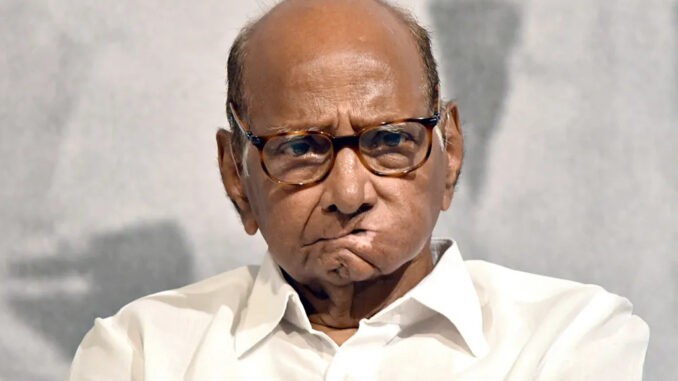
Sharad Pawar was just 37 when he first became Maharashtra’s chief minister in 1978. Almost five decades later, he was still winning parliamentary elections. In April 2026, at the age of 85, he took another oath as a member of India’s Rajya Sabha. This Sharad Pawar biography follows the political career between those moments, from his early years in Baramati to four terms as chief minister, two major Union ministries and the creation of the Nationalist Congress Party (NCP).
Few Indian politicians have experienced as many changes in government and party alliances. Pawar has worked with the Congress, formed his own party, served in coalition governments and faced a major rebellion led by his nephew Ajit Pawar. Even after that split, he remained active in national politics. In September 2026, he publicly rejected reports that his faction was preparing to merge with another party or join the BJP-led National Democratic Alliance.
His influence also extends beyond elections. Pawar has worked on agricultural policy, headed international cricket organisations and supported educational institutions in Maharashtra. He is married to Pratibha Pawar, and their only daughter, Supriya Sule, is a member of Parliament. His long career has brought public recognition, political disputes and continuing debate about his record in government.
Sharad Pawar Quick Facts
| Detail | Information |
|---|---|
| Full name | Sharad Govindrao Pawar |
| Date of birth | December 12, 1940 |
| Age | 85 years old (October 2026) |
| Birthplace | Baramati, Pune district, Maharashtra |
| Nationality | Indian |
| Profession | Politician and former Union minister |
| Political party | Nationalist Congress Party – Sharadchandra Pawar |
| Current position | Rajya Sabha MP and NCP (SP) president |
| Father | Govindrao Pawar |
| Mother | Shardabai Pawar |
| Wife | Pratibha Pawar |
| Marriage date | August 1, 1967 |
| Children | One daughter, Supriya Sule |
| Education | Undergraduate studies |
| Major offices | Chief Minister of Maharashtra, Union Defence Minister, Union Agriculture Minister |
| Major honour | Padma Vibhushan (2017) |
His birth date, family details, education and parliamentary experience are documented in the Rajya Sabha’s official biographical directory.
Early Life and Family Background
Sharad Pawar was born on December 12, 1940, in Baramati, a town in Maharashtra’s Pune district.
His father, Govindrao Pawar, worked in the cooperative sector, while his mother, Shardabai Pawar, was involved in local public affairs and social activities.
He grew up in a large family with several siblings. His younger brother, Pratap Pawar, later became involved in business and newspaper publishing.
Baramati was an agricultural region, and farming remained an important part of Pawar’s political identity. During his later career, he frequently returned to the constituency to meet farmers, local leaders and cooperative organisations.
His family’s involvement in public affairs also helped expose him to political discussions while he was growing up.
Sharad Pawar’s Education
Pawar completed his early schooling in Maharashtra before pursuing further studies in Pune.
Published biographies associate him with the Brihan Maharashtra College of Commerce, where he pursued commerce-related studies.
However, the Rajya Sabha’s official biographical directory lists his educational qualification as undergraduate. It does not establish that he completed a bachelor’s degree.
He became involved in student politics during his younger years, developing relationships within the Congress organisation that later helped him enter electoral politics.
Unlike political leaders who entered public life after establishing careers in law or business, Pawar became involved in party organisation relatively early.
How Sharad Pawar Started His Political Career
Pawar began participating in Congress activities during the late 1950s.
He joined the Youth Congress in 1958 and later became president of the Pune district Youth Congress organisation.
His early political development was influenced by Yashwantrao Chavan, Maharashtra’s first chief minister and an important national Congress leader.
In 1967, Pawar contested the Maharashtra Legislative Assembly election from Baramati.
He won the seat at the age of 26, beginning a long period in state and national legislatures.
During the 1970s, he held several responsibilities in the Maharashtra government, including positions connected with agriculture, education, industry, home affairs and youth welfare.
These appointments gave him administrative experience before he became chief minister.
Becoming Maharashtra’s Youngest Chief Minister
One of Pawar’s earliest major political breakthroughs came on July 18, 1978.
At age 37, he became the youngest person to serve as chief minister of Maharashtra up to that time.
His appointment followed a political dispute within the Congress organisation. Pawar broke away from the existing arrangement and helped form a coalition government under the Progressive Democratic Front.
The new government brought together politicians from different parties who opposed the existing state leadership.
His first term ended in February 1980 after Indira Gandhi returned to power nationally and President’s Rule was imposed in Maharashtra.
The experience established Pawar as a politician willing to form alliances outside traditional party arrangements.
He subsequently spent time in opposition politics before returning to the Congress in the 1980s.
Sharad Pawar’s Four Terms as Chief Minister
Pawar eventually served as Maharashtra’s chief minister on four separate occasions, although two consecutive terms in 1988 and 1990 formed one continuous period of leadership.
| Term | Period | Political context |
|---|---|---|
| First | July 1978 – February 1980 | Led the Progressive Democratic Front coalition |
| Second | June 1988 – March 1990 | Returned as chief minister under Congress |
| Third | March 1990 – June 1991 | Continued after the state Assembly election |
| Fourth | March 1993 – March 1995 | Returned to Maharashtra following service in the Union government |
His four terms were separated by periods of opposition leadership and national political responsibilities.
He returned as chief minister in 1993 after the communal violence that followed the demolition of the Babri Masjid in December 1992 and the subsequent Mumbai riots.
His administration faced major public-order and reconstruction challenges, particularly after the March 1993 Mumbai bombings.
His final term ended in 1995 when the Shiv Sena-BJP alliance won the Maharashtra Assembly election.
The Economic Times’ account of Pawar’s political career records these changes in government.
His Career as India’s Defence and Agriculture Minister
Union Defence Minister, 1991–1993
In June 1991, Pawar entered the Union government under Prime Minister P. V. Narasimha Rao.
He served as Union Minister of Defence from 1991 to 1993.
The appointment moved him from state-level politics into a major national government position.
His period at the Defence Ministry coincided with changes in India’s economy and its international relationships following the end of the Cold War.
He left the ministry in March 1993 to return as Maharashtra’s chief minister.
Union Agriculture Minister, 2004–2014
Pawar returned to the Union Cabinet in May 2004 after the Congress-led United Progressive Alliance formed the national government.
Under Prime Minister Manmohan Singh, he served as Union Agriculture Minister for ten years, until May 2014.
His responsibilities involved agricultural policy, crop production, food security and issues affecting Indian farmers.
The government introduced or expanded programmes connected with agricultural credit, research, irrigation and food production during this period.
However, the agricultural sector continued to face difficult problems, including farmer debt, unequal access to irrigation and periods of rising food prices.
Pawar’s record as agriculture minister therefore remains open to different assessments. Supporters point to production growth and agricultural development initiatives, while critics highlight persistent rural distress and concerns about how effectively government policies reached vulnerable farmers.
In a February 2010 government address, Prime Minister Manmohan Singh discussed the challenge of rising food prices and the measures being taken by the administration.
Why Did Sharad Pawar Form the Nationalist Congress Party?
In 1999, Pawar broke away from the Indian National Congress following a disagreement over party leadership.
He and fellow Congress leaders P. A. Sangma and Tariq Anwar challenged the prospect of Sonia Gandhi becoming India’s prime minister because of her foreign birth.
The disagreement led to their expulsion from the Congress.
On June 10, 1999, the three leaders established the Nationalist Congress Party.
Although the new party emerged from a dispute with the Congress leadership, the NCP later cooperated with the Congress in coalition governments.
In Maharashtra, the two parties formed alliances that influenced state politics for years. At the national level, the NCP became part of the Congress-led United Progressive Alliance.
Pawar remained closely associated with the party’s leadership until a major split emerged in 2023.
The NCP Split and His Dispute with Ajit Pawar
In July 2023, Sharad Pawar’s nephew, Ajit Pawar, led a rebellion within the Nationalist Congress Party.
Ajit and several other party legislators joined the BJP-Shiv Sena-led Maharashtra government, with Ajit becoming deputy chief minister.
The rebellion created rival groups, both claiming to represent the original NCP.
In February 2024, the Election Commission of India recognised Ajit Pawar’s faction as the official Nationalist Congress Party and awarded it the party’s clock symbol.
Sharad Pawar’s group received the name Nationalist Congress Party – Sharadchandra Pawar.
It was also allotted a new election symbol showing a man blowing a traditional trumpet, commonly called the tutari.
The Indian Express reported the symbol allocation in February 2024.
The split changed the political organisation Pawar had founded more than two decades earlier. It also created competition between members of the same political family.
What Happened After Ajit Pawar’s Death?
On January 28, 2026, Ajit Pawar died in a plane crash near Baramati.
He was serving as Maharashtra’s deputy chief minister at the time. Four other people also died in the crash.
Reuters confirmed his death and the circumstances reported by aviation authorities.
His death changed the leadership situation within the rival NCP faction and renewed discussion about whether the two groups might reunite.
Ajit’s wife, Sunetra Pawar, subsequently emerged as the leader of the faction associated with the Maharashtra government.
Discussions and speculation about reunification continued during 2026, but no completed merger had been established in the latest reporting reviewed.
Sharad Pawar’s Latest Political News in 2026
Re-elected to the Rajya Sabha
Pawar continued his parliamentary career in 2026.
On April 6, 2026, he took the oath as a re-elected Rajya Sabha member representing Maharashtra.
He was 85 years old at the time.
The event was confirmed by the Government of India’s Press Information Bureau.
His re-election extended a parliamentary career that had already included service in both the Lok Sabha and Rajya Sabha.
His September 2026 Statement on NCP Merger Rumours
Throughout 2026, reports suggested that Pawar’s party might reunite with the rival NCP faction or move toward the BJP-led National Democratic Alliance.
Some reports cited unnamed political sources and discussions involving leaders from different parties.
However, on September 28, 2026, Pawar publicly rejected those suggestions.
He stated that the NCP (SP) would remain a separate political party and would not merge with another organisation.
He also said his party would remain in opposition as part of Maharashtra’s Maha Vikas Aghadi and the national INDIA alliance.
His position was reported by The New Indian Express.
The statement is important because it represents Pawar’s publicly expressed position rather than an interpretation based on unconfirmed negotiations.
October 2026 Visits to Drought-Affected Areas
In early October 2026, Pawar visited drought-affected areas of Pune district, including Baramati, Purandar and Daund.
Farmers discussed crop damage, water shortages, livestock needs and financial problems caused by inadequate rainfall.
Pawar asked the Maharashtra government to extend relief measures to more affected areas and provide financial assistance to farmers.
He also called for loan waivers, improved access to drinking water and support for agricultural electricity connections.
Hindustan Times reported the visits on October 3, 2026.
His requests were proposals for government action. They do not establish that every relief measure had been approved or implemented.
Who Is Sharad Pawar’s Wife?
Sharad Pawar is married to Pratibha Pawar, also known as Pratibhatai Pawar.
The couple married on August 1, 1967, the same year Pawar was first elected to the Maharashtra Legislative Assembly.
Pratibha comes from a family with connections to Indian cricket. Her father, Sadashiv Shinde, represented India in Test cricket.
She has generally maintained a less public profile than her husband, although she has appeared alongside him at family and political events.
Their marriage has lasted through Pawar’s long career in state and national politics.
How Many Children Does Sharad Pawar Have?
Sharad and Pratibha Pawar have one daughter, Supriya Sule.
Supriya was born on June 30, 1969, in Pune.
She followed her father into politics and became a member of Parliament.
Supriya represented Maharashtra in the Rajya Sabha before entering the Lok Sabha in 2009.
She has repeatedly won elections from Baramati, the constituency closely associated with her father’s political career.
In 2024, she won the Baramati Lok Sabha election against Sunetra Pawar, her cousin Ajit Pawar’s wife.
Her family and parliamentary details are documented in the Lok Sabha’s official member profile.
Is Ajit Pawar Sharad Pawar’s Son?
No. Ajit Pawar was Sharad Pawar’s nephew, not his son.
Ajit was the son of Sharad Pawar’s elder brother, Anantrao Pawar.
Ajit entered Maharashtra politics and became one of the state’s prominent leaders, serving several terms as deputy chief minister before his death in January 2026.
Their political disagreements became particularly public following the NCP split in 2023.
Sharad Pawar’s Contributions to Indian Cricket
Alongside politics, Pawar held important administrative positions in Indian and international cricket.
He served as president of the Board of Control for Cricket in India (BCCI) before moving into international cricket administration.
On July 1, 2010, he became president of the International Cricket Council (ICC), succeeding David Morgan.
His two-year term ended in 2012, when Alan Isaac succeeded him.
The ICC’s official announcement confirms his appointment and the length of his presidency.
His cricket administration career connected him with sports organisations at both national and international levels, separate from his elected government roles.
Awards and Public Recognition
One of Pawar’s major national honours came in 2017.
He received the Padma Vibhushan, India’s second-highest civilian award, for his contribution to public affairs.
His name appears in the Government of India’s official 2017 Padma Awards announcement.
Pawar has also received public recognition for his work in politics, agriculture, educational institutions and cricket administration.
Sharad Pawar’s Autobiography and Books
Pawar has written about his career and experiences in Indian politics.
His Marathi autobiography, Lok Maze Sangati, was first published in December 2015.
The English-language memoir On My Terms: From the Grassroots to the Corridors of Power also examines his journey through state and national politics.
In April 2023, an updated edition of his Marathi autobiography was released.
The book attracted renewed attention when Pawar announced his intention to step down as NCP president at a public event in May 2023. He later withdrew that decision.
The publisher Rajhans Prakashan records the autobiography’s original publication and its updated edition.
Political Criticism and Public Debate
Pawar’s long political career has included disputes over coalition arrangements, government policy and party leadership.
One recurring criticism concerns his willingness to work with different political groups, sometimes following earlier disagreements with them.
Critics describe those changes as evidence of political opportunism. Other observers argue that coalition negotiations are a normal part of India’s multiparty political system, especially in Maharashtra.
His agricultural policies have also faced scrutiny over food prices, farmer debt and the condition of rural communities during his years as Union agriculture minister.
The 2023 NCP split created further debate about party organisation, leadership authority and the relationship between family members holding public office.
These disagreements involve different political interpretations. They should be assessed through specific decisions, official records and documented outcomes rather than unsupported claims about personal motives.
What Is Sharad Pawar’s Net Worth?
Sharad Pawar’s financial interests have been discussed in public reporting, but there is no independently verified figure representing his complete personal net worth in October 2026.
Election affidavits provide information about assets and liabilities disclosed at particular dates. They should not automatically be treated as a complete, current calculation of personal wealth.
Celebrity finance websites sometimes publish estimates of his fortune without explaining how the amounts were calculated.
Such figures are not a reliable substitute for verified financial disclosures.
Where Is Sharad Pawar Now?
As of October 2026, Sharad Pawar is 85 years old and continues serving as a Rajya Sabha member representing Maharashtra.
He remains president of the Nationalist Congress Party – Sharadchandra Pawar, the political organisation established following the split in the original NCP.
His recent activities include parliamentary work, meetings with political leaders and visits to communities affected by drought in Maharashtra.
At a time when many of his former colleagues have retired from public life, Pawar continues participating in debates over agricultural relief, coalition politics and Maharashtra’s political future.
His career stretches from the 1967 Maharashtra Assembly election to his 2026 Rajya Sabha re-election. That history makes him an important figure for understanding the changes in Maharashtra politics, the development of the NCP and the role of regional parties in India’s coalition governments.
Leave a Reply